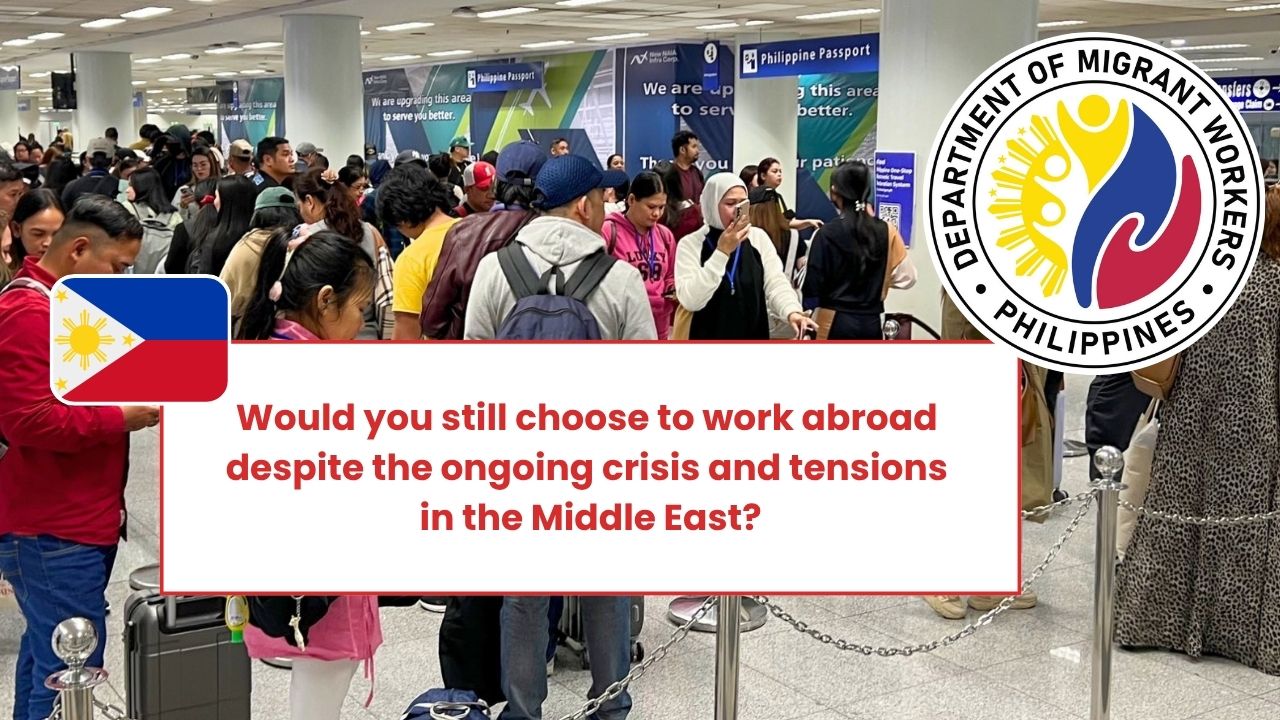
PHILIPPINES: A large number of overseas Filipino workers (OFWs) who returned home due to the Middle East crisis are not giving up on working abroad. According to the Department of Migrant Workers (DMW), 84% of repatriated OFWs still plan to go back overseas, based on entry survey data.
So far, over 4,000 Filipinos have been repatriated, including workers and some tourists caught in the conflict. The government is now focusing on what happens next for these workers.
Contents
Why do 84% of returning OFWs still want to work abroad?
For many OFWs, working abroad is still the best way to support their families. Higher salaries, stable income, and limited job options locally push them to continue overseas employment.
DMW data shows that even after sudden evacuation, most workers are willing to take the risk again. This reflects how important overseas work remains for Filipino households.
Can repatriated OFWs return to their previous jobs?
Yes, some OFWs can return to their previous employers.
DMW Secretary Hans Leo Cacdac said around 50% of returning workers may still go back to their host countries. This is possible if they still have valid employment visas and contracts.
The government is helping process clearances faster to support their return.
What assistance does the DMW provide to returning OFWs?
The DMW is offering a full reintegration support system, including:
- Airport assistance and immediate aid
- Skills profiling through surveys
- Job matching based on experience
- Access to job fairs and overseas opportunities
There is also a national reintegration network to guide OFWs who want to restart locally or abroad.
What jobs are available for displaced OFWs worldwide?
To support displaced workers, the government has prepared around 200,000 job opportunities across:
- Asia
- Europe
- Africa
- The Americas
These job orders are matched to the skills collected from returning OFWs, making it easier for them to find new placements.
READ NEXT: Repatriated OFWs from Israel Get Fresh Start with PHP 70K to PHP 90K Jobs in Croatia
Is it safe for OFWs to go back to the Middle East now?
Safety remains a major concern.
The ongoing conflict has already caused deployment drop-offs, with some workers choosing not to continue their contracts. While some countries may reopen opportunities, the situation is still developing.
Officials advise OFWs to wait for updates and follow government guidance before making decisions.