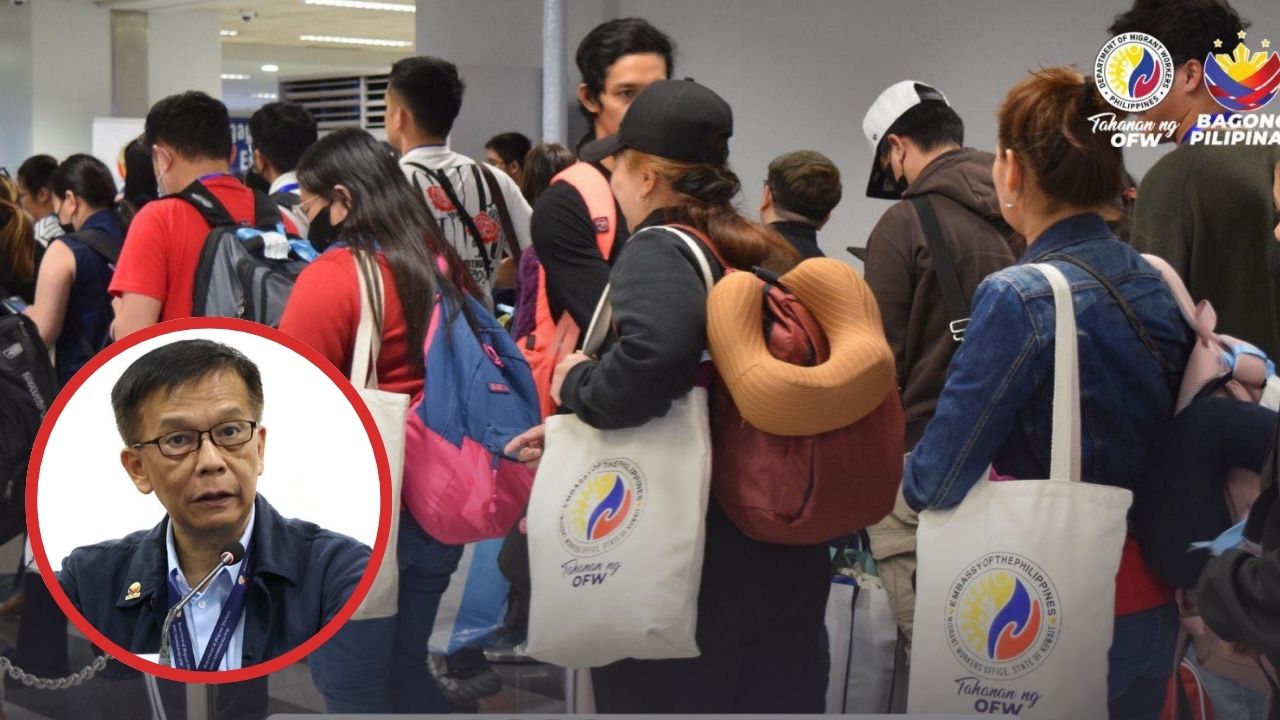
PHILIPPINES: The Department of Migrant Workers (DMW) clarified that no deployment ban is in place for Overseas Filipino Workers (OFWs) in the Middle East, despite rising tensions in some countries.
This comes after reports spread online claiming that thousands of OFWs were stranded due to a supposed ban.
Contents
What is really happening on the ground?
DMW confirmed that deployment of OFWs to the Middle East is still ongoing. There is no official suspension of deployment across the region.
However, the Department of Foreign Affairs (DFA) has raised different alert levels in some countries due to security risks. These alerts may affect movement and safety, but they do not automatically mean a deployment ban.
At the same time, the government continues repatriation efforts. As of last report, over 4,200 Filipinos have already returned to the Philippines, with more expected in the coming days.
Why are there reports claiming OFWs are stranded due to a deployment ban?
Confusion likely came from misinterpretation of alert levels and ongoing evacuation efforts.
When people hear about:
- Rising tensions
- Repatriation flights
- Government advisories
They may assume a full deployment ban is in effect.
But DMW stressed that alert levels are not equal to a deployment ban. Each country has its own situation, and policies depend on actual risk assessments.
How are recruitment agencies told to help OFWs?
DMW has directed recruitment and manning agencies to take a more active role in supporting OFWs abroad.
They are instructed to:
- Monitor the condition of deployed workers closely
- Provide immediate assistance during emergencies
- Coordinate with Philippine embassies and DMW offices
This ensures that OFWs have direct support on the ground, especially in high-risk areas.
What did Secretary Hans Leo Cacdac say about OFW safety?
DMW Secretary Hans Leo Cacdac emphasized shared responsibility in protecting Filipino workers.
He said, “Our shared responsibility is to ensure the safety and well-being of our OFWs, especially in times of crisis.”
This reflects a coordinated effort between government agencies, recruiters, and host country partners.
What changes were made to prepare OFWs better?
To improve readiness, DMW updated its Pre-Departure Orientation Seminar (PDOS).
The updated sessions now include:
- Real-time security risks in host countries
- Safety reminders during conflicts
- Clear steps on who to contact during emergencies
This helps future OFWs better understand the risks before leaving the country.