PHILIPPINES: Department of Migrant Workers (DMW) Secretary Hans Cacdac has denied claims that it is spending up to ₱190,000 per Overseas Filipino Worker (OFW) for repatriation flights, calling the figures “misleading and inaccurate”. Cacdac sent a message to community leaders and volunteers, clarifying that the figures circulating online do not reflect the actual costs of repatriation.
Editor’s Note: This clarification addresses an earlier report based on findings from a Philippine Senate panel. The panel indicated that the cost of bringing home OFWs had allegedly surged to around ₱190,000 per person, nearly double the previous amount. This sharp increase was attributed to ongoing tensions in the Middle East, which continue to disrupt travel and raise global costs.
Contents
What sparked the confusion
Posts circulating online claimed that the government was paying as much as ₱190,000 per OFW to bring workers home amid the ongoing Middle East crisis.
This raised concern among Filipinos abroad, especially those closely following evacuation and repatriation efforts.
To address this, DMW Secretary Hans Cacdac sent a message to community leaders and volunteers, clarifying that the figures circulating online are inaccurate and do not reflect the actual costs of repatriation.
He also pointed to OWWA’s exit and entry survey, which found that 75 percent of repatriated OFWs were returning specifically to “escape conflict.” Cacdac strongly rejected suggestions that workers were coming home for a leisure vacation or to take advantage of government programs, calling such claims deeply insulting to OFWs and expressing his personal pain at these mischaracterizations.
Actual cost is “much lower”, says DMW
According to Cacdac, the numbers being shared online are false. He noted:
- Flight costs were recorded as low as ₱95,000 per person
- Prices increased to around ₱127,000 due to rising fuel costs
- Costs never reached ₱190,000 per OFW
The DMW secretary explained that global fuel price increases did affect expenses, but not to the level being claimed.
This clarification aims to stop the spread of misinformation and restore public trust in the government’s response.
“Safety over cost” in crisis response
Cacdac stressed that the focus of the government is not just on cost, but on ensuring the safety of OFWs.
He described the current global situation as one of the most serious crises in recent years, requiring urgent and decisive action.
Key priority areas include:
- Safe and organized evacuation
- Proper coordination with international partners
- Immediate support for returning OFWs
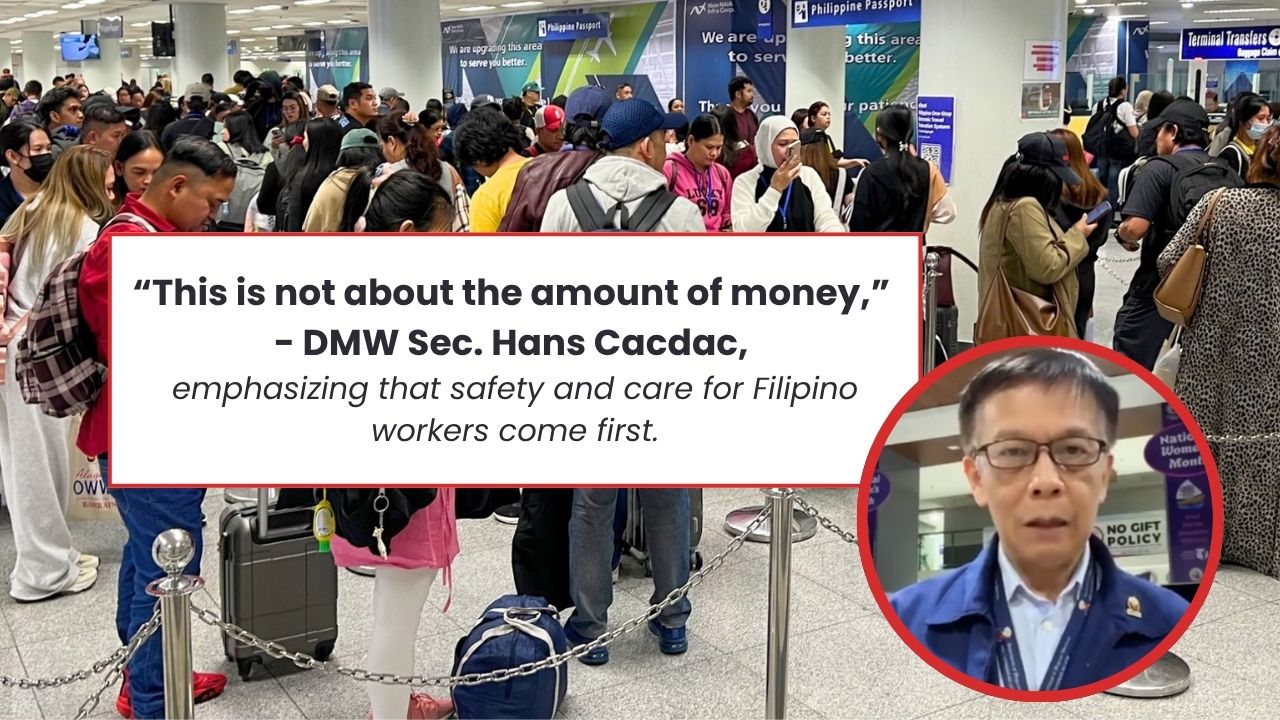
“This is not about the amount of money,” Cacdac said, emphasizing that safety and care for Filipino workers come first.
Call for unity among OFWs in UAE
Amid rising online debates, the Filipino Social Club (Filsoc) in Dubai urged the community to stay calm and avoid arguments.
Filsoc President Ericson Reyes advised:
- Avoid engaging in heated discussions online
- Focus on verified updates
- Direct concerns to the Migrant Workers Office (MWO)
This message highlights the importance of unity during crisis situations.