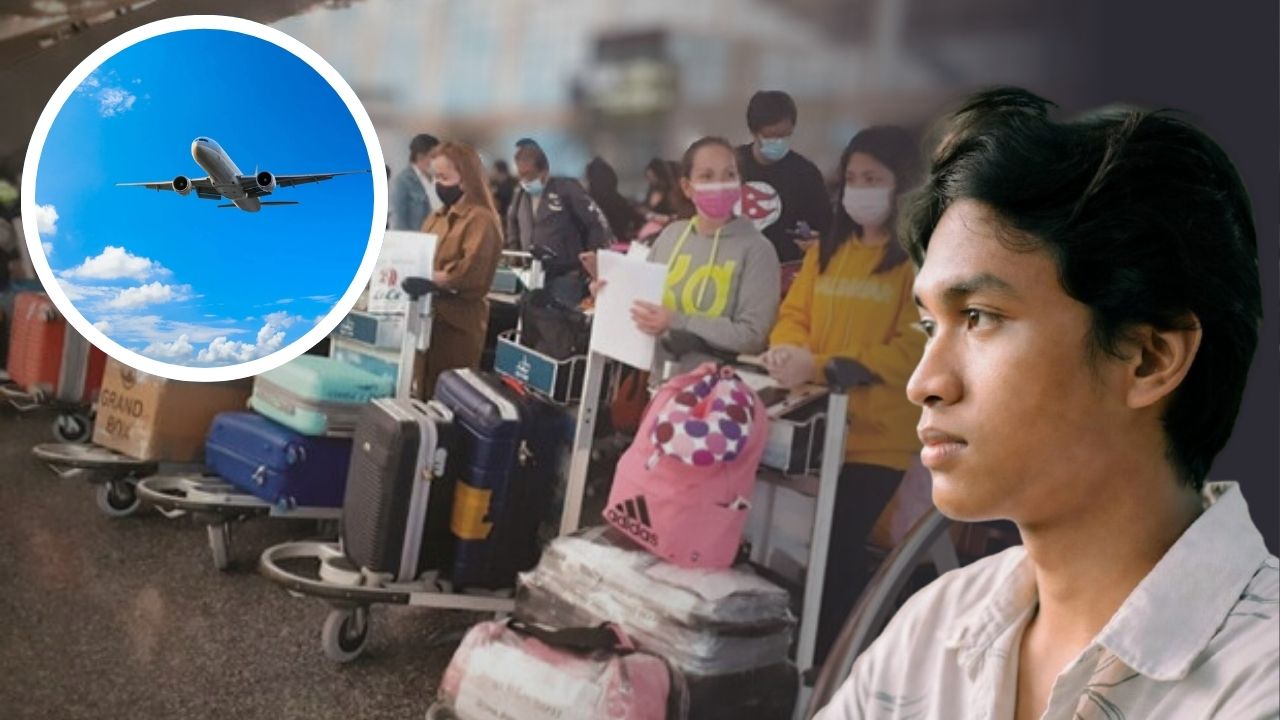
Voluntary repatriation happens when individuals willingly return to their home country, often with support from our Philippine government agencies.
Under Republic Act 8042 and its amendment RA 10022, repatriation refers to the return of a worker to the Philippines when they face:
- War or political unrest
- Unsafe or abusive working conditions
- Illness or mental stress
- Emergency situations
Contents
Why This Matters Now
With ongoing security risks in some Middle East areas, more OFWs are considering going home early. But the uncertainty about their employment and visa status adds another layer of stress to an already tough choice.
If an OFW requests voluntary repatriation during a crisis:
1. The contract may end early – The status of your contract depends on your specific situation. Your employer may choose to cancel the contract, or it may end early according to labor rules.
2. Returning to the same job is not guaranteed – If your work visa is cancelled, going abroad again will usually need a new application process, employer approval, and new visa processing.
3. Deployment may be restricted – If a country is under alert level, redeployment may be temporarily suspended.
4. Government assistance is for emergencies – DMW, OWWA, and DFA support repatriation to ensure safety
Note: As per the latest requirements for repatriation from MWO-Dubai, OFWs in the UAE can return to the UAE as long as their visa remains valid and they come back within 6 months.
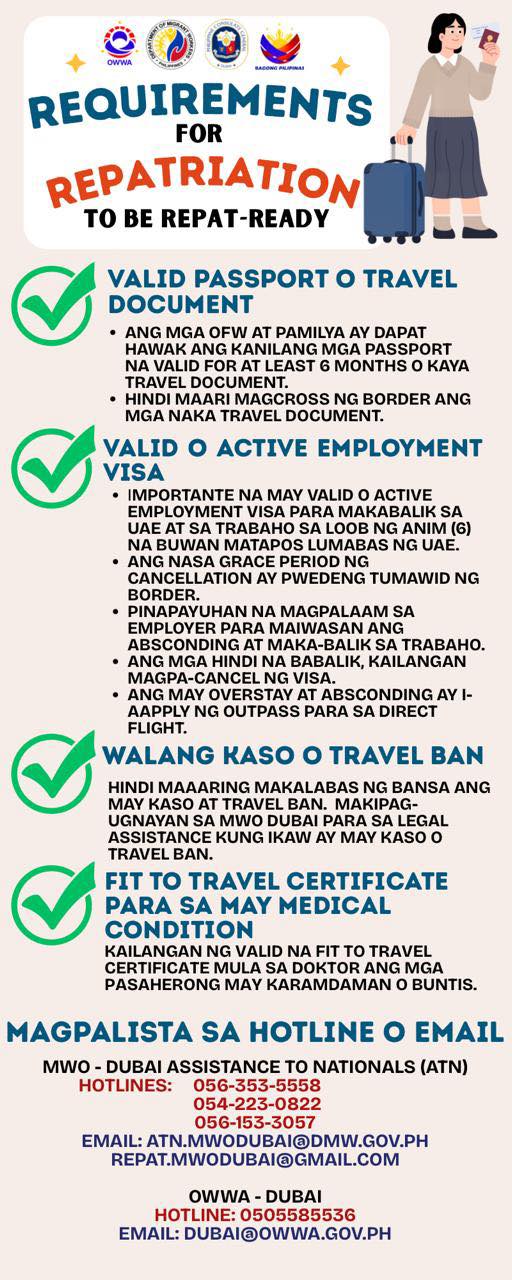
For the most accurate and updated guidance, please contact MWO Dubai or your nearest MWO office. For OFWs abroad, you may visit your nearest Migrant Workers office for assistance and updated information specific to your case.
For Undocumented Filipinos and Those Without Work Visas
If you are undocumented or do not have a valid work visa, you may still be assisted with repatriation. Each case is different, so the process and requirements may vary, but it is very important that you reach out to the nearest Philippine Embassy, Consulate, or MWO office for help and up-to-date information. The embassies and consulates are there to support you and guide you through the repatriation process.
MWO Dubai Assistance to Nationals
Hotlines:
-
- 056-353-5558
- 054-223-0822
- 056-153-3057
Emails:
• atn.mwodubai@dmw.gov.ph
• repat.mwodubai@gmail.com
OWWA Dubai Contact Info:
- 050-558-5536
- Email: dubai@owwa.gov.ph
Current Situation in the UAE
Despite the ongoing challenges, there are signs of stability in key host countries in the region.
Philippine Ambassador to the UAE Alfonso Ver said the situation in the United Arab Emirates remains stable, and no OFWs have lost their jobs so far.
He also assured that repatriation efforts are ongoing for those who choose to return home amid the conflict.
For now, OFWs are encouraged to stay informed, assess their situation carefully, and coordinate with official channels before making any decision.