The Department of Migrant Workers and the Global Anti-Scam Alliance have formalized a new partnership aimed at protecting overseas Filipino workers from online scams and digital fraud.
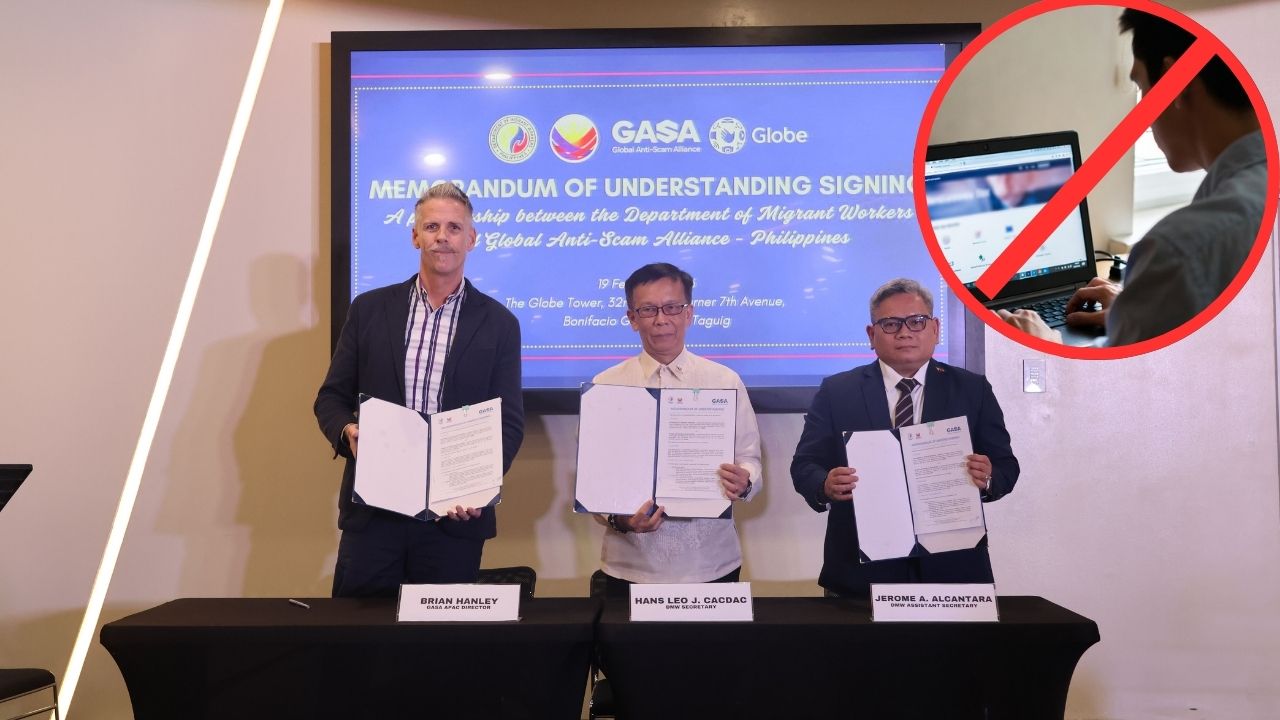
A Memorandum of Understanding was signed on February 19, 2026, in Bonifacio Global City by Migrant Workers Secretary Hans Leo J. Cacdac and GASA APAC Director Brian Hanley. The agreement signals a stronger push to shield OFWs and their families from rising cyber threats.
Stronger Cross-Border Protection
Under the partnership, both sides will improve cross-border intelligence sharing and expand access to tools that help migrant workers detect and avoid fraudulent schemes.
Secretary Cacdac said the initiative goes beyond simple awareness drives.He explained that the agreement also aims to address deeper issues, such as limited job opportunities that sometimes make workers vulnerable to fake offers.
By strengthening information campaigns and linking scam victims to legitimate employment options, the DMW hopes to provide both preventive and corrective solutions.
For many OFWs, scams often start with fake job offers, investment pitches, or online messages that appear legitimate. Once victims send money or share personal data, recovery becomes difficult.
A Global Concern
Director Hanley stressed that scams are no longer just a local issue. He described them as a growing global cybercrime problem that requires cooperation between governments and private companies.
The collaboration will support:
-
Expanded public awareness campaigns
-
Digital literacy programs for OFWs and families
-
Joint training sessions
-
Research initiatives on scam trends
GASA is a global coalition composed of major technology and financial institutions, including Globe Telecom, Gogolook, Meta, Google, and Mastercard. The group works to strengthen cross-sector and cross-border efforts against scams.
For OFWs, the partnership signals stronger digital protection support from both local and international partners. While scams cannot be eliminated overnight, officials say better coordination and shared intelligence can reduce risks.
Workers are still advised to verify job offers through official DMW channels and avoid sharing sensitive information online.
As cyber-enabled crimes continue to evolve, authorities say proactive awareness and global cooperation remain key to protecting Filipino workers abroad.