The Department of Migrant Workers announced that the Philippines has formally assumed the chairmanship of the Abu Dhabi Dialogue for the 2026–2027 term, marking the country’s second time to lead the regional labor migration platform.
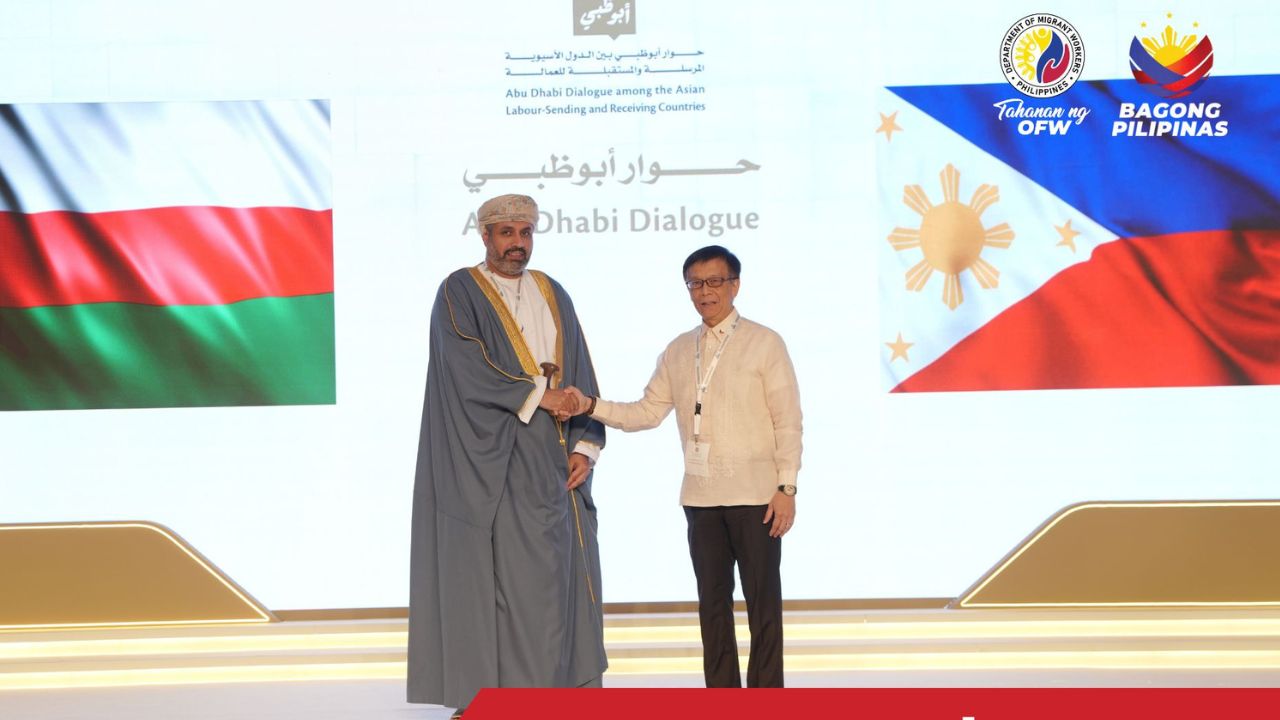
The chairmanship turnover took place at the close of the 8th Ministerial Consultations of the Abu Dhabi Dialogue on February 1, 2026, held at the InterContinental Dubai Festival City. Labor Secretary Hans Leo J. Cacdac formally accepted the role on behalf of the Philippine government.
The Abu Dhabi Dialogue is a state-led regional consultative process launched in 2008. It brings together labor-sending countries in Asia and destination countries in the Gulf Cooperation Council to discuss policies on temporary contractual labor. While not a treaty body, outcomes from the Dialogue often shape bilateral labor agreements and national labor policies.
Focus on protection and rights
In his remarks, Cacdac said the Philippines would steer the Dialogue toward a people-centered and rights-based approach, with special attention to “the most vulnerable” migrant workers. Priority areas outlined for the Philippine chairmanship include social protection, health insurance, skills development, access to justice, labor mobility, and just transition.
Ferdinand R. Marcos Jr. welcomed the development and described the chairmanship as a reaffirmation of the country’s commitment to safe, orderly, and mutually beneficial labor mobility across the Asia–Gulf corridor.
Officials said the agenda reflects both regional realities and domestic reforms in Philippine migration governance following the creation of the Department of Migrant Workers. The Philippines is expected to use the platform to promote stronger coordination on welfare systems, skills recognition, and dispute resolution mechanisms for migrant workers.
Strategic timing
The Philippines last chaired the Abu Dhabi Dialogue in 2012, when it hosted the Second Ministerial Consultation in Manila. Its return to the chair comes at a time when Gulf states are undergoing labor market reforms and economic diversification, raising questions about worker protection, reskilling, and long-term employment pathways.
On the sidelines of the consultations, Cacdac also met with counterparts from other labor-sending countries, including Pakistan, to discuss cooperation on social security, skills development, and reintegration programs. These talks highlighted how the Dialogue serves as a venue for advancing shared positions among origin countries.
As chair, the Philippines will help shape ministerial declarations, guide pilot initiatives, and set priorities for the 2026–2027 cycle. Officials said outcomes from this term could influence future bilateral labor agreements and regional standards affecting millions of migrant workers, including overseas Filipinos across the Gulf.