MANILA, PHILIPPINES: Pag-IBIG Fund is offering a new loan option for members who need extra cash while prices of goods and services remain high due to the conflict in the Middle East.
The loan is under Pag-IBIG’s Special Assistance for Financial Emergencies, or SAFE loan program.
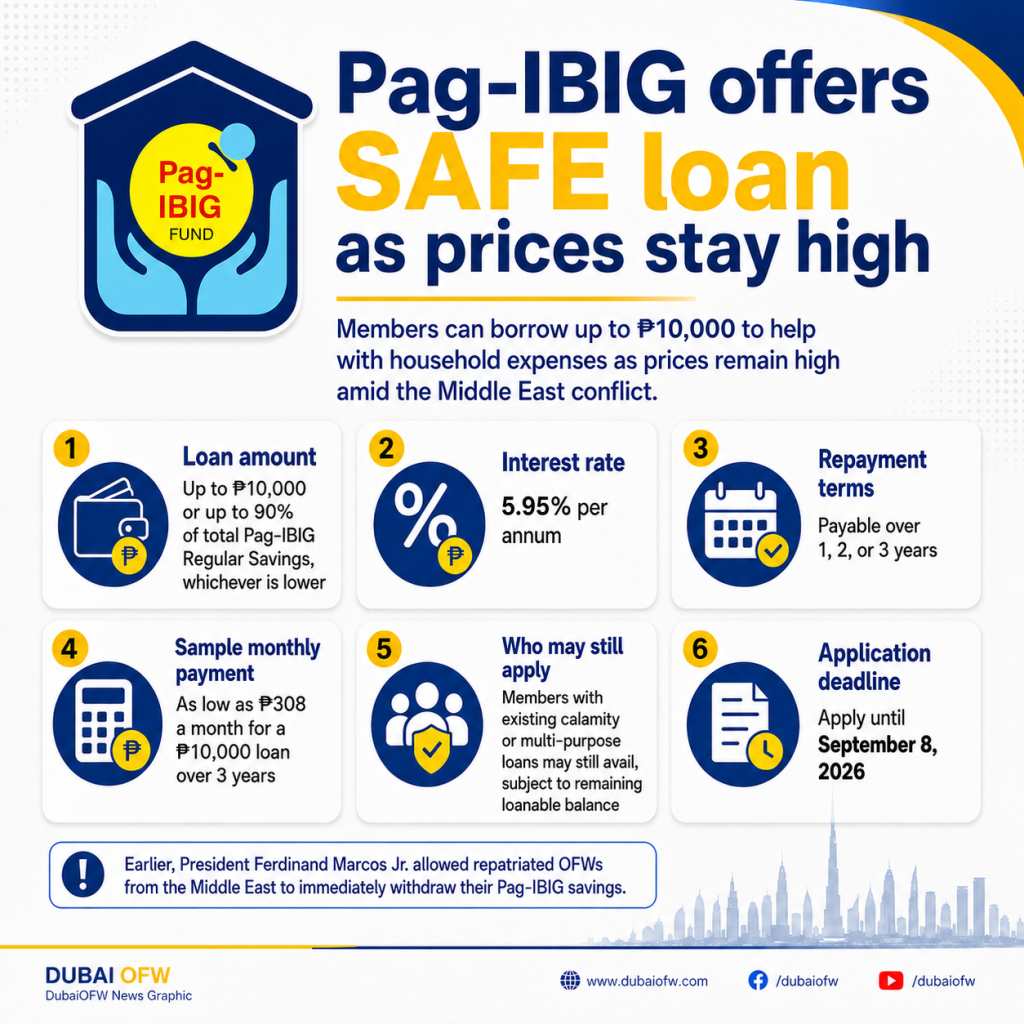
Through this program, qualified members may borrow up to ₱10,000.
They may also borrow up to 90 percent of their total Pag-IBIG Regular Savings, whichever amount is lower.
The money is meant to help members cover household expenses, especially as many Filipino families continue to feel the pressure of higher costs.
Contents
Who Can Borrow and How Much?
Pag-IBIG members may apply for the SAFE loan even if they already have an existing calamity loan or multi-purpose loan.
But the final amount they can receive will depend on their remaining loanable balance from their Pag-IBIG Regular Savings.
Pag-IBIG said this rule is needed because all short-term loans, including the SAFE loan, must stay within the 90 percent limit of a member’s Regular Savings.
This means a member cannot borrow beyond the amount allowed under Pag-IBIG’s short-term loan rules.
For many workers, this loan can offer a safer option than borrowing from lenders with very high interest rates.
Lower Monthly Payments Over Three Years
The SAFE loan has an interest rate of 5.95 percent per year.
Members may choose to pay the loan over one year, two years, or three years.
Pag-IBIG Fund Chief Executive Officer Marilene Acosta said the program was designed to give members quick cash support for urgent needs.
She said that for a ₱10,000 loan payable over three years, the monthly payment may be as low as ₱308.
This gives members a more manageable way to pay back the loan while still handling other family needs.
Deadline Set for September 8
Pag-IBIG members who want to apply for the SAFE loan have until September 8, 2026.
The program comes as the government gives support to Filipinos affected by the ongoing situation in the Middle East.
President Ferdinand Marcos Jr. had earlier allowed overseas Filipino workers repatriated from the Middle East to immediately withdraw their Pag-IBIG savings.
This move was meant to help returning OFWs access their money faster as they rebuild their lives and support their families back home.