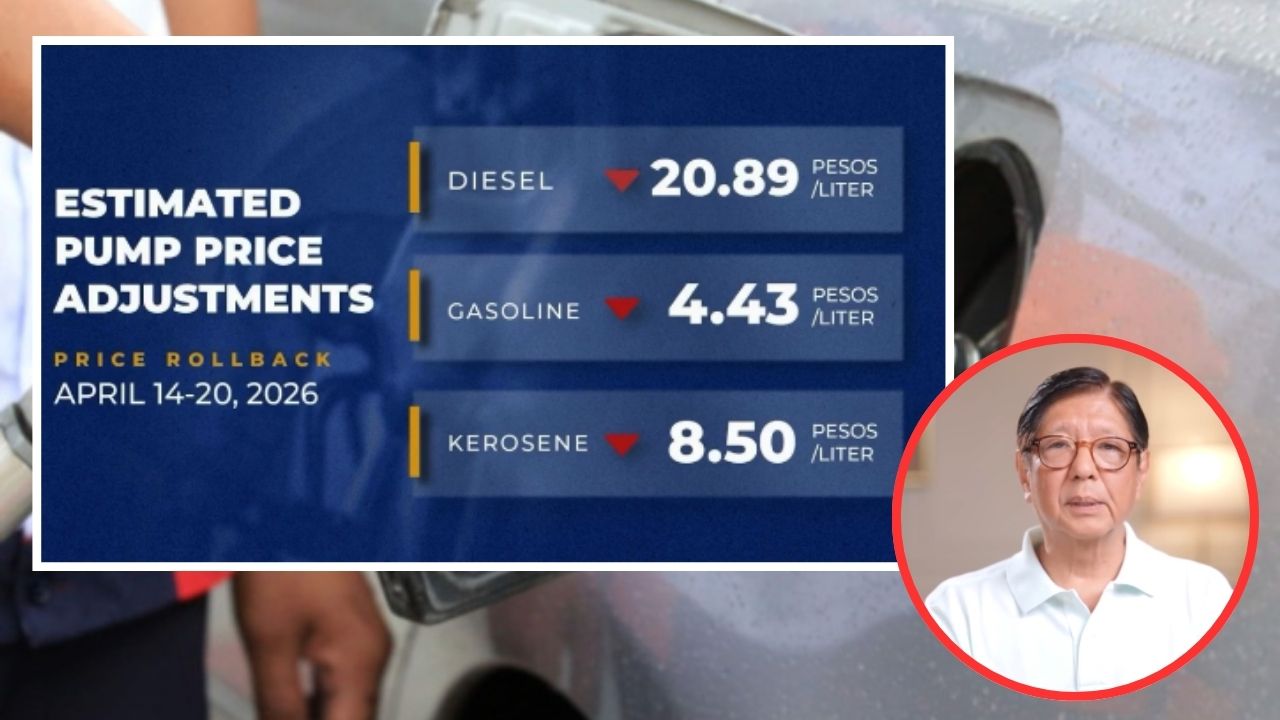
PHILIPPINES: Fuel prices will drop sharply starting April 14, with diesel down by over ₱20 per liter, gasoline by ₱4.43, and kerosene by ₱8.50, giving much-needed relief to drivers and Filipino families.
Contents
How much will diesel prices drop in April 2026?
President Ferdinand Marcos Jr. confirmed that diesel prices will go down by more than ₱20 per liter.
Gasoline will drop by ₱4.43 per liter, while kerosene will decrease by ₱8.50 per liter.
This is one of the biggest fuel rollbacks in recent months, especially for diesel, which is widely used by public transport and delivery services.
When will the fuel price rollback take effect?
The rollback will begin on Tuesday, April 14, 2026.
Fuel price changes in the Philippines usually follow weekly adjustments, and oil companies are expected to implement the new prices on the same day nationwide.
Drivers and operators are advised to check updated pump prices early Tuesday.
How will the fuel rollback affect transportation fares?
Lower diesel prices may help reduce pressure on jeepney, bus, and delivery costs.
However, fare reductions are not automatic. Transport groups and regulators like the Land Transportation Franchising and Regulatory Board usually review fare changes before any adjustment is approved.
In the short term, commuters may not see immediate fare cuts, but operators will have lower fuel expenses.
Why did the government announce a fuel price rollback?
The rollback is part of the government’s effort to ease the impact of rising global oil prices.
According to President Marcos, this move is meant to reduce daily expenses for drivers, commuters, and households.
He also said this is not enough, and more support measures will be announced soon to help Filipinos cope with high living costs.
How will fuel price cuts affect food and living costs?
Fuel prices directly affect the cost of transporting goods.
With lower diesel prices:
- Delivery costs for food and supplies may decrease
- Market prices may stabilize over time
- Businesses may spend less on logistics
However, price changes in food and basic goods may take time, as supply chains adjust gradually.