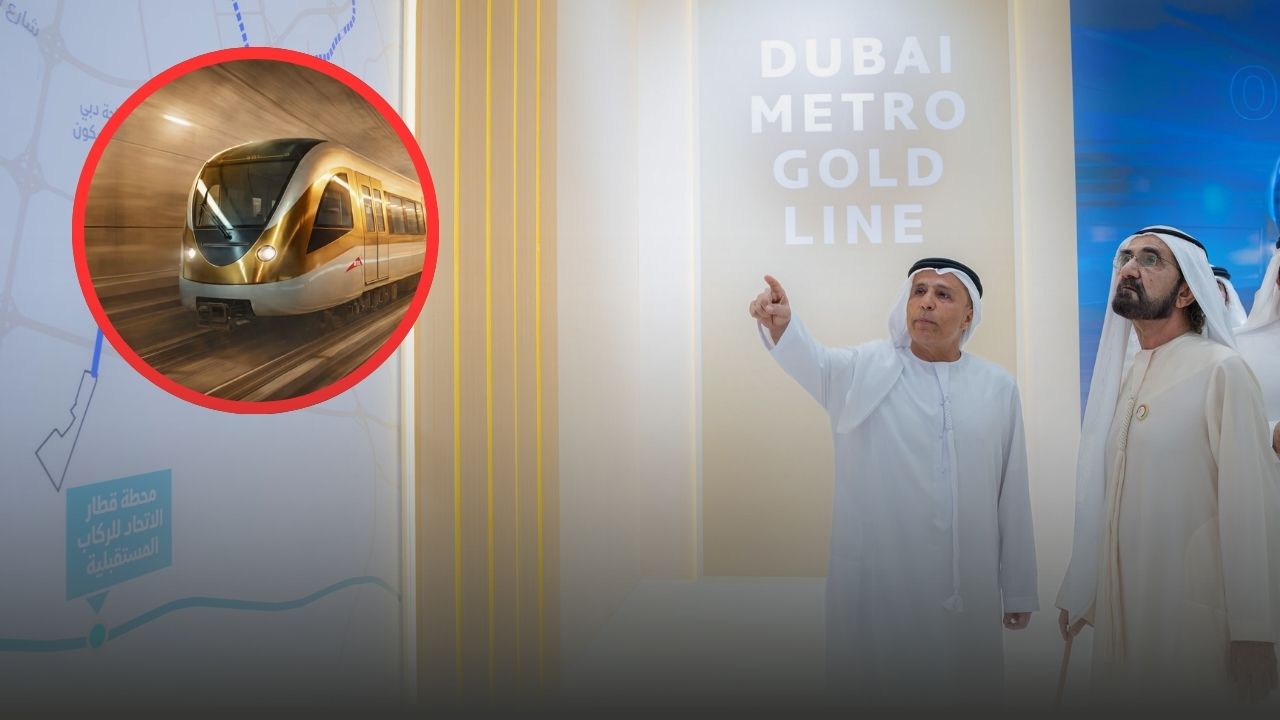
DUBAI: Dubai is moving forward with its largest transport project yet after approval was given for the new Metro Gold Line—a 42-kilometer underground rail system designed to improve mobility and reduce traffic across the emirate.
Contents
A Massive Transport Project Gets Green Light
His Highness Sheikh Mohammed bin Rashid Al Maktoum approved the project, which is valued at around AED 34 billion. The Gold Line will have 18 stations and will be Dubai’s first fully underground metro line.
Authorities confirmed that construction will begin soon, with a target opening date set for September 9, 2032.
Where the Gold Line Will Pass
The new line will connect 15 key locations across Dubai. It will start in Al Ghubaiba and pass through major areas such as:
- Business Bay
- Meydan
- Al Barsha South
- Jumeirah Village Circle (JVC)
- Jumeirah Golf Estates
It will also link with existing Metro lines and connect to Etihad Rail, helping create a wider transport network across the UAE.
How This Will Help Daily Commuters
The Gold Line is expected to serve around 1.5 million people by 2040. Daily passengers could reach up to 465,000.
Officials say the project will:
- Reduce congestion on busy routes like the Red Line
- Cut over 40 million car trips each year
- Improve travel time and reduce delays
- Support over 55 ongoing development projects
This means smoother daily commutes for workers and residents across the city.
Bigger, Faster, and More Connected Network
Once completed, the Dubai Metro network will expand by 35%, growing from 120 km to 162 km. The number of stations will increase from 67 to 85.
The Gold Line will also be built faster than previous projects, with a timeline said to be 30% quicker than the Blue Line.
Why Dubai Is Investing in This Project
Officials say the project supports long-term plans under the Dubai 2040 Urban Master Plan. It is also expected to:
- Boost property values near stations
- Improve environmental sustainability
- Reduce road accidents and fuel use
The project could generate up to 430% economic return over 20 years through savings and increased efficiency.