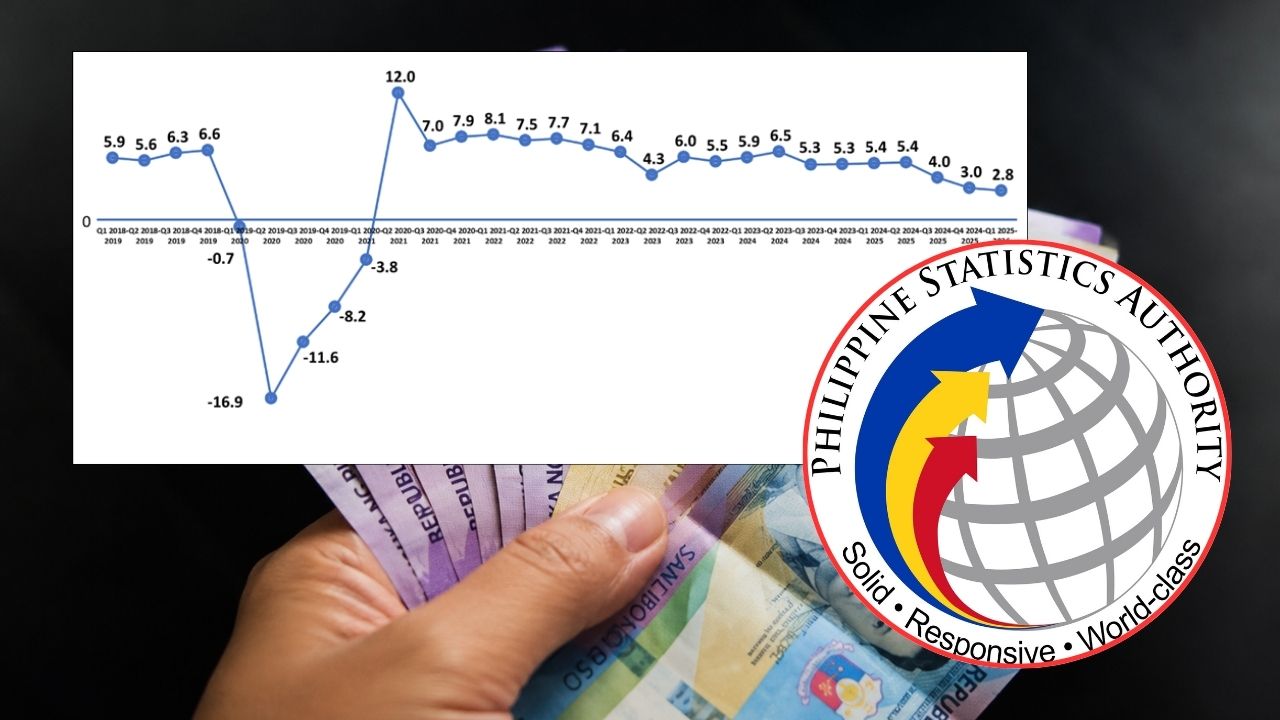
PHILIPPINES: The Philippine economy grew by 2.8 percent in the first quarter of 2026, according to the Philippine Statistics Authority. The figure shows that the country continued to expand, but at a slower pace compared with stronger growth periods in past years.
The report, released on May 7, 2026, measured Gross Domestic Product at constant 2018 prices. GDP is one of the main ways to check how much the economy produced within a period.
Contents
Trade, Finance, and Government Services Led the Growth
The biggest contributors to growth came from service-related activities.
Wholesale and retail trade, including the repair of motor vehicles and motorcycles, grew by 4.6 percent. Financial and insurance activities also rose by 3.4 percent. Public administration and defense, including compulsory social security, posted stronger growth at 8.6 percent.
These sectors helped keep the economy positive during the first quarter. Trade remains important because it reflects buying, selling, and repair activities across the country. Finance and insurance also show continued movement in banking, payments, lending, and related services.
Services Stayed Strong While Farming and Industry Slipped
Among the major economic sectors, Services grew by 4.5 percent year on year. This made it the strongest broad sector in the first quarter.
However, Agriculture, forestry, and fishing declined by 0.2 percent. Industry also posted a small decline of 0.1 percent.
This means the economy’s growth was not even across all sectors. While service activities improved, production based sectors such as farming and industry faced weaker results.
Filipino Households Still Spent More
On the demand side, Household final consumption expenditure grew by 3.0 percent. This means Filipino families continued to spend more during the period.
Government final consumption expenditure rose by 4.8 percent. Exports of goods and services increased by 7.8 percent, while imports also grew by 6.1 percent.
However, Gross capital formation dropped by 3.3 percent. This may point to weaker investment activity during the quarter.
Income From Abroad Also Increased
The country’s Gross National Income grew by 3.0 percent. Net Primary Income from the Rest of the World also rose by 4.5 percent.
This part may be relevant to overseas Filipinos because it includes income flows connected to Filipinos and Philippine entities abroad.