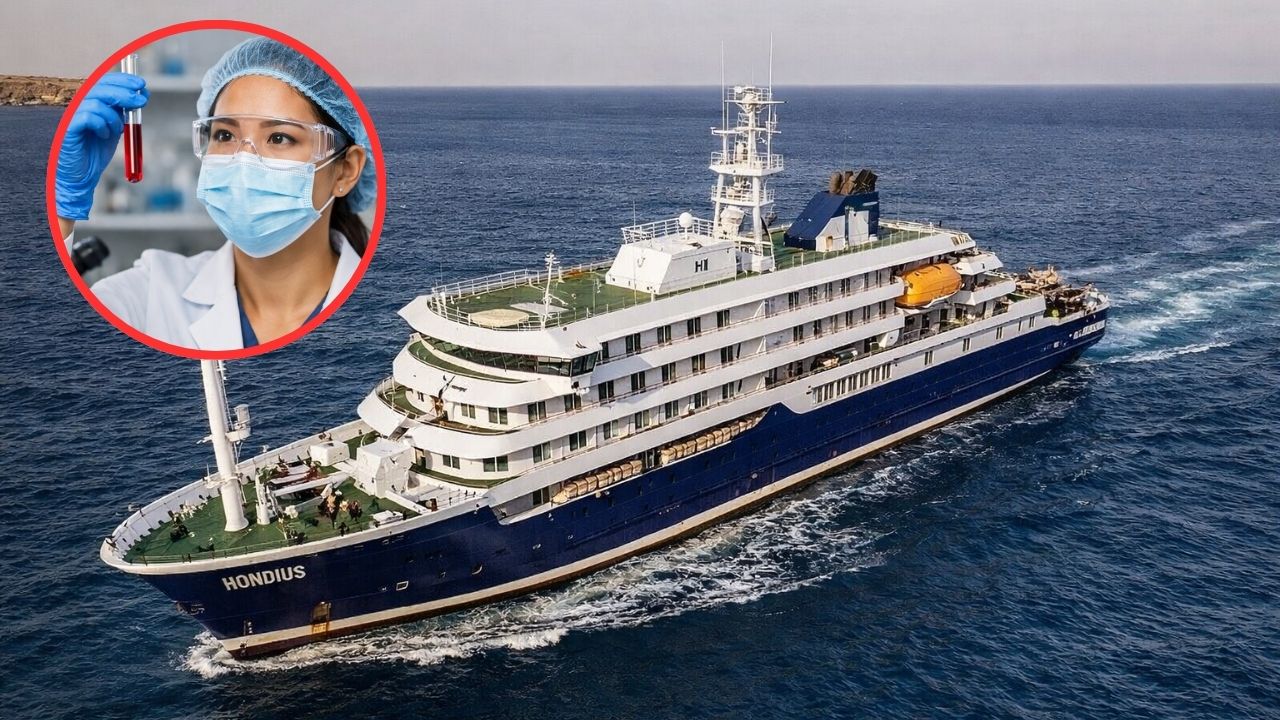
PARIS, FRANCE: A suspected Hantavirus outbreak on a cruise ship in the Atlantic has raised questions among travelers and overseas workers about how the virus spreads and who may be at risk.
Three people have died after the suspected outbreak on the MV Hondius, which had travelled from Ushuaia in Argentina to Cape Verde. One patient treated in Johannesburg, South Africa, tested positive for a Hantavirus, according to health officials cited by Agence France-Presse.
The World Health Organization said the risk to the public remains low, but experts are still studying the case.
Contents
Not a Common Travel Virus, But Serious
Hantaviruses are a family of viruses found in many parts of the world. Some countries, including China, Russia, and South Korea, report thousands of cases each year. Other places, including parts of the Americas and Europe, report hundreds of cases annually.
The virus is not like flu or COVID-19. It is usually linked to rodents such as rats, mice, and voles.
People can get infected when they breathe in dust or air particles contaminated with rodent urine, droppings, or saliva. Infection may also happen through direct contact with waste, bites, or scratches.
Can Hantavirus Spread Between People?
In most cases, Hantavirus does not spread from person to person.
However, one strain called the Andes virus has confirmed cases of human-to-human transmission. Experts say this usually needs close and prolonged contact, such as within a household or family setting.
Because the cruise ship came from southern Argentina, where Andes virus is known to circulate, health experts are checking if this strain is involved.
Symptoms Can Start Mild, Then Turn Severe
Some people may have mild symptoms or no symptoms at all. Others may feel body pain, stomach upset, cough, or fever-like illness.
In serious cases, Hantavirus can affect the kidneys or lungs. Some strains can cause severe breathing problems and may require oxygen support in intensive care.
New World strains, found in the Americas, can be more dangerous and may have a higher death rate than some Old World strains found in Europe, Asia, and Africa.
Who Should Be More Careful?
People who work near rodents or in areas with possible rodent exposure face higher risk. This includes workers in farming, forestry, cleaning, storage, or poorly maintained spaces.
Older adults, people with weak immune systems, and those with existing health conditions may also face higher risk from severe infection.
What Travelers and OFWs Should Do Now
For most OFWs, expats, and travelers, there is no need to panic. The main safety step is to avoid contact with rodents and places with possible rodent waste.
Wear protection when cleaning dusty storage areas, report rodent problems in accommodation, and seek medical help fast if fever, cough, breathing trouble, or unusual body pain appears after possible exposure.
Health experts are still waiting for virus sequencing results to confirm the exact strain involved in the cruise ship cases.