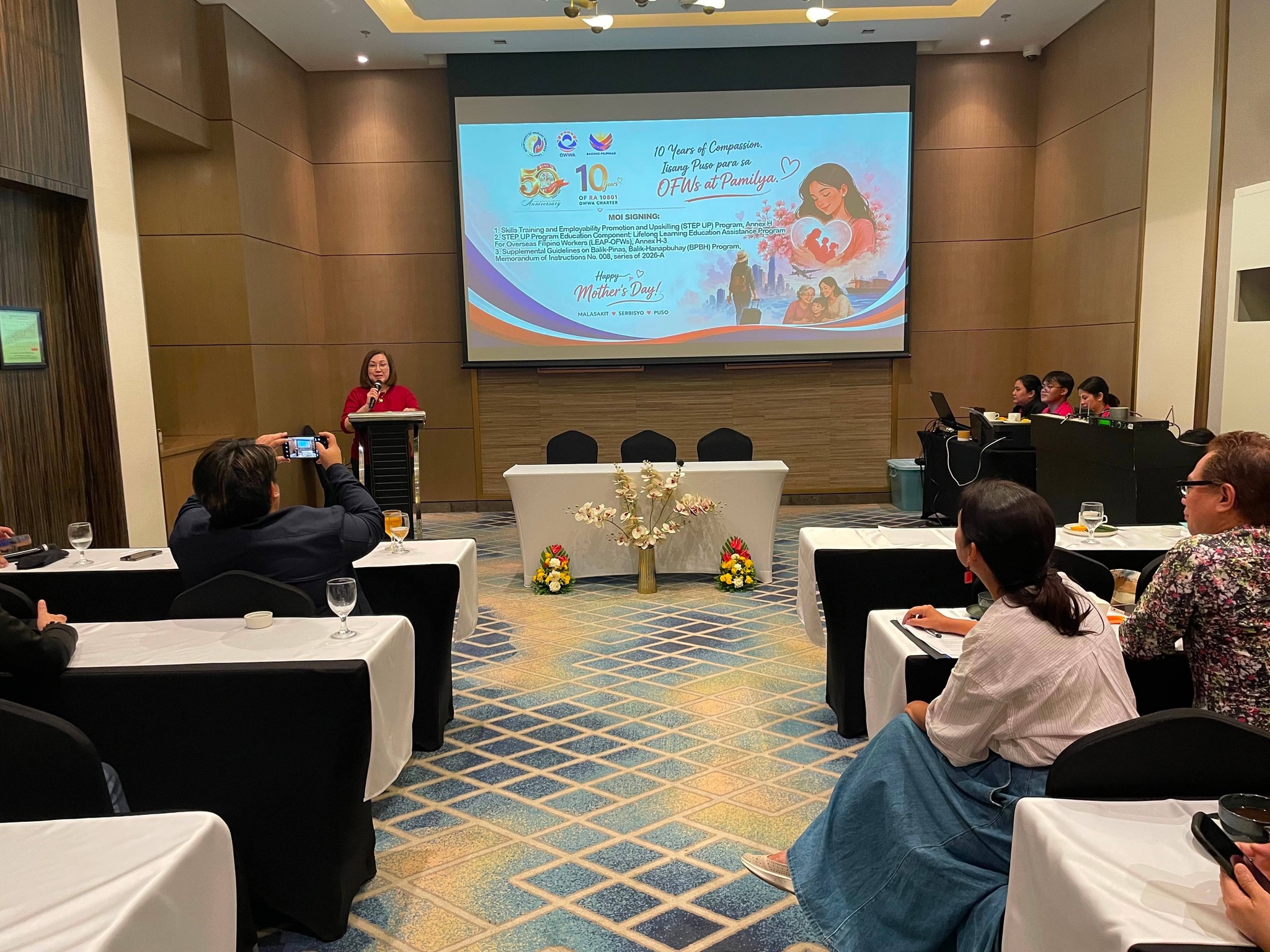
PHILIPPINES: The Overseas Workers Welfare Administration marked the 10th anniversary of Republic Act No. 10801, also known as the OWWA Act, with the signing of three new Memorandum of Instructions for overseas Filipino workers.
OWWA Administrator Patricia Yvonne M. Caunan signed the instructions as part of the agency’s continued support for OFWs and their families.
The programs focus on three major needs of migrant workers, better skills, continued education, and livelihood assistance for those returning home.
Contents
Three Programs With Practical Goals
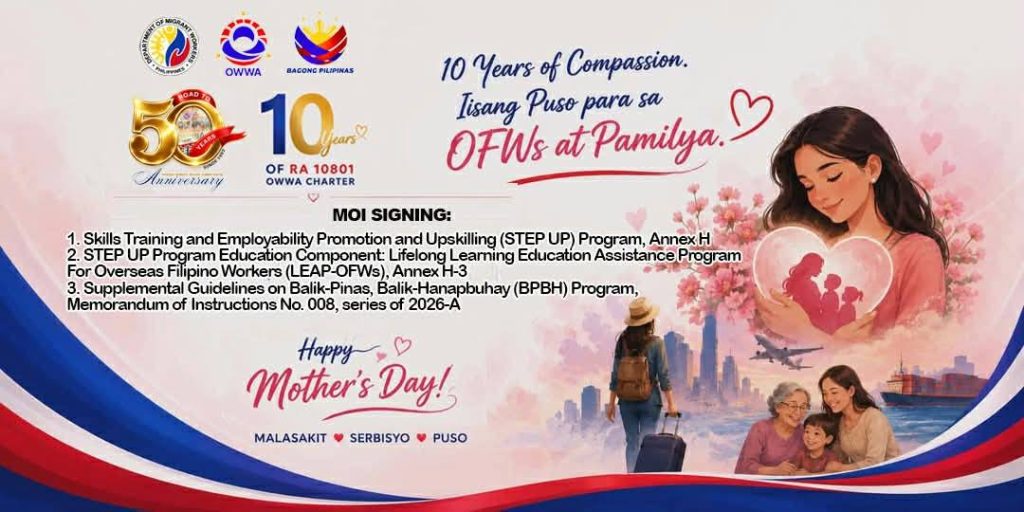
The first program is the Skills Training and Employability Promotion and Upskilling Program, also called STEP UP.
This program is meant to help OFWs improve their work skills and prepare for better job opportunities. For many workers, this may be useful when they want to shift careers, qualify for new roles, or build stronger credentials.
The second program is the STEP UP Program Education Component, called the Lifelong Learning Education Assistance Program for Overseas Filipino Workers, or LEAP OFWs.
This focuses on continued learning. It supports the idea that OFWs should still have access to education and training even while they are working abroad or planning their future after overseas employment.
The third instruction covers the Supplemental Guidelines on MOI No. 008, Series of 2026, which amends the rules for the Balik Pinas, Balik Hanapbuhay Program.
This program supports returning OFWs who need help restarting their livelihood in the Philippines.
Reintegration Beyond Financial Aid
The new instructions are part of OWWA’s Alagang OWWA and reintegration programs.
They also follow the government’s National Reintegration Network framework, which centers on Kalinga, Kaalaman, at Kabuhayan.
In simple terms, this means care, knowledge, and livelihood. The goal is not only to help OFWs during emergencies, but also to guide them as they return to their families and communities.
Support for Life After Overseas Work
OWWA said these efforts are aligned with the directive of President Ferdinand Marcos Jr. to provide OFWs with enough support and opportunities to improve their knowledge and sustain their livelihood.
This is important because many OFWs come home after years of work abroad and need help adjusting to local life again. Some may want to start a small business. Others may need training before applying for new work.
OWWA Pledges Continued Assistance
As OWWA marks 10 years of its charter, the agency said it will continue providing programs and services to OFWs wherever they are in the world.
The message of the anniversary is clear: OFW welfare does not stop at deployment. It should also include preparation, protection, education, and support when workers come home.