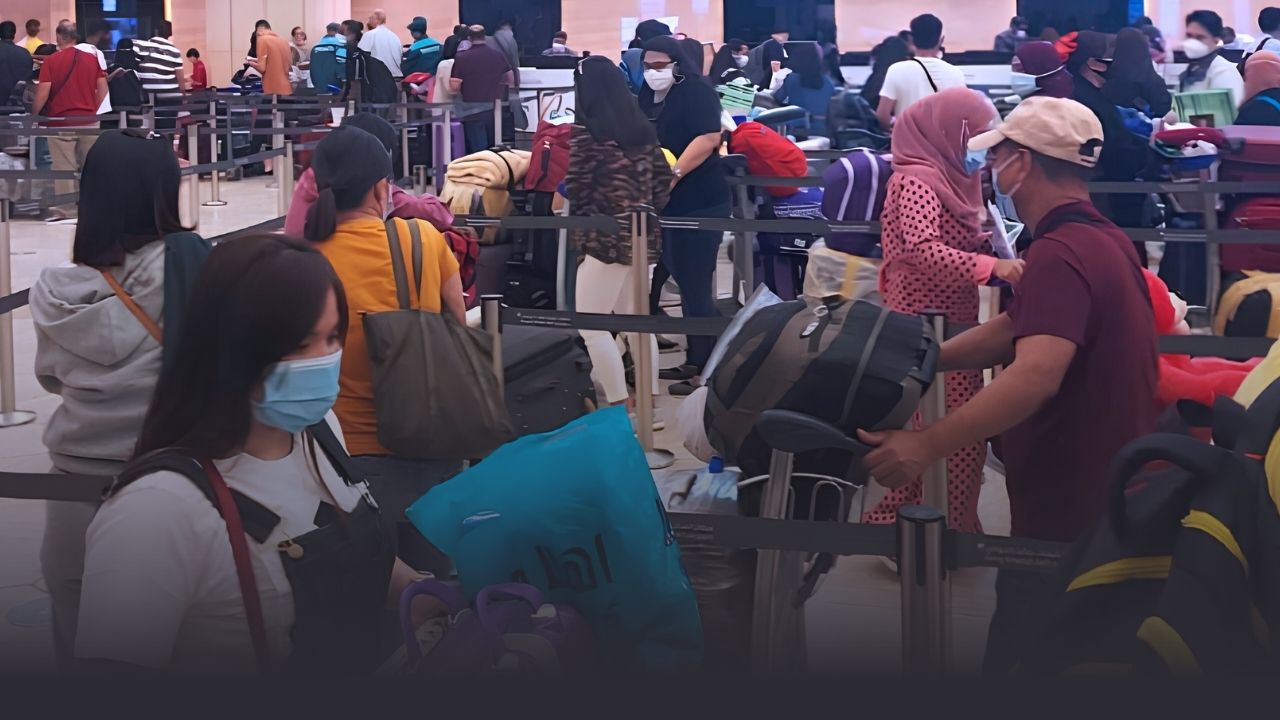
UAE: Travelers flying out for Eid should not panic over hantavirus, but they should be prepared. The World Health Organization has reported a rare Andes hantavirus cluster linked to the MV Hondius cruise ship. WHO earlier noted eight cases and three deaths, while a later update reported 11 cases as of May 13, 2026. The CDC also issued a health alert for exposed passengers and monitoring measures.

Contents
The Virus Is Rare, But Not Something to Ignore
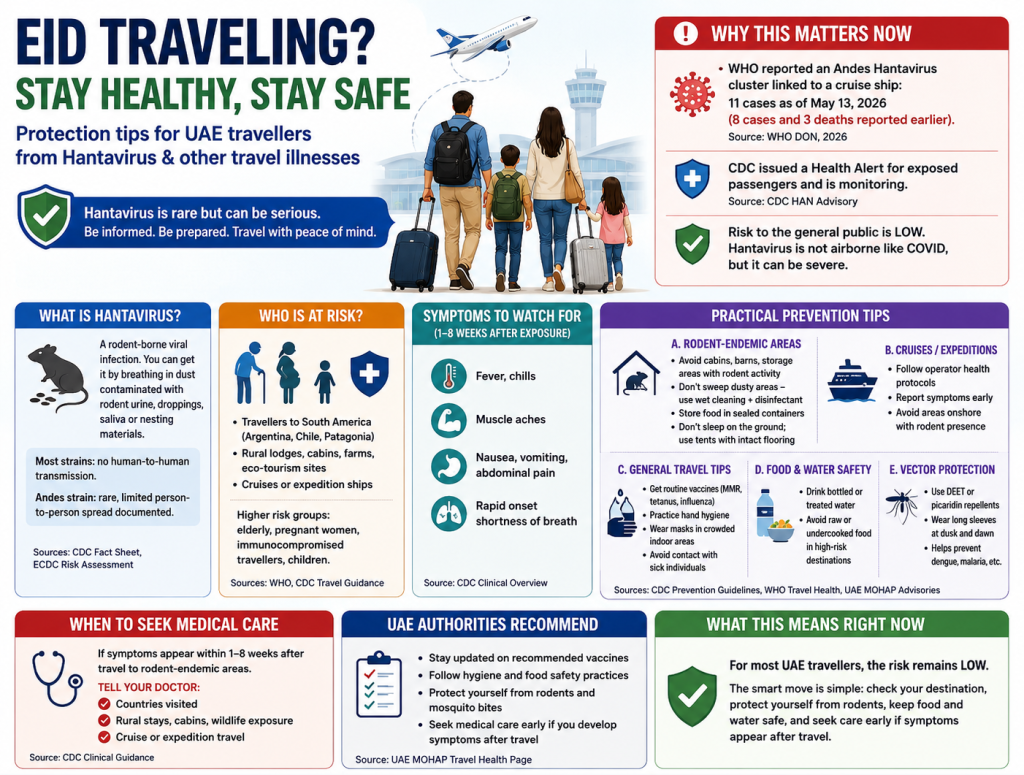
Hantavirus is not like COVID. It is usually spread from rodents to people, often when dried urine, droppings, saliva, or nesting materials are disturbed and breathed in. The CDC says infection may also happen if contaminated material enters the eyes, nose, mouth, or broken skin.
Most hantavirus types do not spread from person to person. However, the Andes virus strain has rare documented person to person spread, which is why health agencies are watching this cruise linked cluster closely.
Trips That Need Extra Care
UAE residents should be more careful if they are travelling to rural areas in South America, including Argentina, Chile, and Patagonia. Extra caution is also needed for stays in cabins, farms, eco lodges, barns, storage areas, expedition ships, and remote cruise stops.
Older travelers, pregnant women, children, and people with weak immune systems should speak to a doctor before going to high risk destinations.
Watch Symptoms After You Return
Hantavirus symptoms can appear one to eight weeks after exposure. Early signs may include fever, tiredness, muscle pain, chills, nausea, vomiting, and stomach pain. A more serious warning sign is sudden shortness of breath.
If these symptoms appear after a rural stay, cruise, or wildlife exposure, seek medical care early. Tell the doctor where you travelled, where you stayed, and if you saw rodents.
Cabin Rule: Do Not Sweep Dusty Spaces
If you enter a cabin or storage room with signs of rodents, do not sweep dry dust. Open the area if possible, avoid stirring dust, and use wet cleaning with disinfectant. Store food in sealed containers. Do not sleep directly on the ground. Use tents with proper flooring.
These simple steps matter because the virus can enter the air when contaminated dust is disturbed.
Cruise and Expedition Rule: Report Symptoms Fast
For cruises, follow the ship operator’s health rules. Avoid shore areas with visible rodent activity. If you feel sick during or after the trip, report it early instead of waiting.
Do Not Forget Common Travel Illnesses
Hantavirus is rare, but food poisoning, flu, dengue, and other travel infections are more common.
Before travel, check needed vaccines, wash hands often, wear a mask in crowded indoor areas, drink bottled or treated water, and avoid raw or undercooked food in higher risk places.
For tropical trips, use mosquito repellent with DEET or picaridin and wear long sleeves at dusk and dawn.